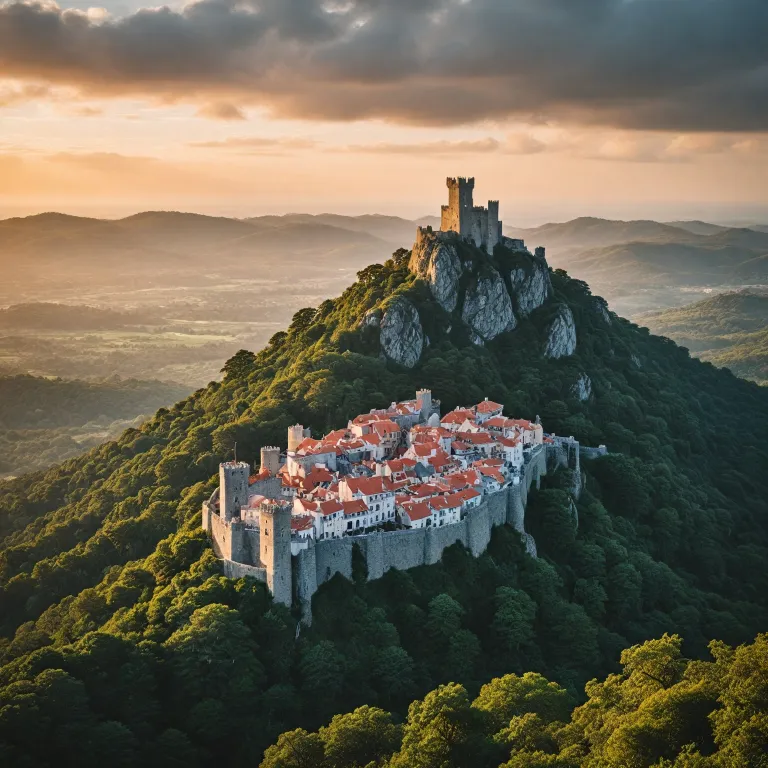
The strategic origins of the castle of the moors in Sintra hills
Perched atop the lush Sintra hills, the castle of the moors stands as a testament to the region’s layered history. Built by the Moors in the 8th and 9th centuries, this fortress was designed to defend the agricultural lands of Sintra and the broader Lisbon region. The castle’s granite and limestone walls snake along the ridge, offering panoramic views of Sintra, Lisbon, and the Atlantic coast. Its battlements, constructed with medieval techniques, reflect the ingenuity of the original builders and the strategic importance of this site during the Moorish occupation of Portugal.
The castle of the moors was more than a military outpost; it was a symbol of power and resilience. The walls, towers, and chapel within the complex provided refuge and control over the fertile valleys below. The structure’s integration with the rugged terrain of the Sintra hills made it a formidable stronghold against invaders. Over time, the castle’s role evolved, but its significance as a guardian of Sintra’s history remained undiminished. Today, the castle moors continue to captivate travelers seeking off-the-beaten-path destinations in Portugal.
Visitors are drawn not only by the castle’s imposing battlements but also by the atmospheric fog low that often shrouds the site, lending an air of mystery. The castle of the moors is a key highlight for those exploring Sintra Portugal, offering a unique perspective on the region’s past. The enduring presence of the castle, alongside landmarks like the national palace and pena palace, cements Sintra’s reputation as a treasure trove of Portuguese heritage.
Architectural marvels: From battlements to chapel and walls
The architectural features of the castle of the moors are both functional and evocative. The robust walls, constructed from local granite, trace the contours of the Sintra hills, creating a dramatic silhouette visible from afar. The battlements, designed for defense, provide vantage points that overlook the valleys and forests of the region. Walking along these walls, visitors can appreciate the craftsmanship that went into building the castle moors and the challenges faced by its original inhabitants.
Within the castle complex, the chapel of São Pedro stands as a poignant reminder of the site’s layered religious history. Originally built during the Moorish period, the chapel was later adapted for Christian worship following the conquest by King Afonso Henriques. The interplay between Moorish and Christian influences is evident in the architectural details and the layout of the castle dos mouros. The restoration efforts led by King Ferdinand II in the 19th century further enhanced the romantic appeal of the site, blending medieval fortifications with picturesque landscaping.
Nearby, the national palace and pena palace offer contrasting architectural styles, but the castle of the moors remains unique for its raw, unembellished strength. The walls and towers evoke the turbulent history of Sintra, from the era of the Moors to the present day. For those interested in architectural heritage, the castle moors provide a compelling case study in the evolution of defensive structures in Portugal. For more on the region’s architectural wonders, explore Sintra’s palatial landmarks.
Historical transformations: From Moorish stronghold to Portuguese icon
The history of the castle of the moors is marked by conquest, adaptation, and preservation. After its construction by the Moors, the fortress played a pivotal role in the defense of Sintra and the Lisbon region. The capture of the castle by King Afonso Henriques in 1147 marked a turning point, as the site transitioned from Moorish to Christian control. This event was part of the broader Reconquista, which reshaped the political and cultural landscape of Portugal.
In the centuries that followed, the castle of the moors experienced periods of neglect and renewal. The 19th-century restoration initiated by King Ferdinand II was instrumental in preserving the site for future generations. His efforts included structural repairs, reforestation, and the integration of romantic aesthetics that harmonized with the natural beauty of the Sintra hills. The castle’s enduring appeal lies in its ability to convey the layered history of Sintra, from the era of the Moors to the present day.
Today, the castle moors are recognized as a symbol of Portuguese resilience and cultural identity. The site’s inclusion in the UNESCO World Heritage list has spurred ongoing archaeological research and conservation efforts. For a deeper dive into Sintra’s historical evolution, visit Sintra’s historical timeline. The castle of the moors, alongside the pena palace and monserrate palace, forms a triad of landmarks that define the region’s unique character.
Planning your visit: Practical tips for exploring the castle moors
Exploring the castle of the moors requires thoughtful preparation due to its rugged terrain and expansive grounds. Wear comfortable shoes, as the uneven paths and steep stairways can be challenging. The area is often enveloped in fog low, especially in the early morning, creating a mystical atmosphere but also reducing visibility. Checking the weather forecast before your visit is advisable to ensure a safe and enjoyable experience.
To avoid long queues at the entrance, purchase tickets online in advance. The castle is open daily from 9:30 AM to 6:00 PM, with the last admission at 5:30 PM. Arriving early in the day allows visitors to explore the site with fewer crowds and enjoy the tranquility of the Sintra hills. Accessibility is limited due to the medieval structure, so individuals with mobility issues may find certain areas difficult to navigate. "Due to its medieval structure and uneven terrain, accessibility is limited; visitors with mobility issues may find it challenging to navigate."
The castle of the moors is easily reached from Lisbon Portugal by train to Sintra, followed by bus number 434. This convenient connection makes it an ideal day trip for those staying in Lisbon. The castle moors, with its ancient battlements and panoramic views, promises an unforgettable journey into Portugal’s past.
Surrounding wonders: Palaces, chapels, and gardens of Sintra
The castle of the moors is just one of many architectural and natural marvels in Sintra Portugal. Nearby, the pena palace dazzles with its vibrant colors and eclectic design, while the national palace of Sintra showcases centuries of royal history. The monserrate palace, with its exotic gardens and romantic architecture, offers a serene contrast to the ruggedness of the castle moors. Each site contributes to the rich tapestry of Sintra’s heritage, making the region a haven for travelers seeking off-the-beaten-path destinations.
Quinta da Regaleira, another highlight, enchants visitors with its mystical gardens, underground tunnels, and ornate chapel. The interplay between natural landscapes and human creativity is evident throughout Sintra, from the lush forests of the serra sintra to the carefully restored chapels and palaces. The church of Santa Maria and the chapel of São Pedro are integral to the region’s spiritual and architectural legacy. Together, these sites form a network of attractions that reward exploration beyond the usual tourist routes.
For those interested in the broader context of Portuguese castles, Sintra offers a unique perspective. The castle of the moors, with its ancient walls and commanding views, stands as a gateway to the region’s diverse cultural offerings. Exploring the palaces and gardens of Sintra provides a deeper appreciation for the artistry and vision that have shaped this corner of Lisbon Portugal.
Immersive experiences: Modern enhancements and visitor engagement
Recent innovations have enhanced the visitor experience at the castle of the moors. The integration of digital guides and augmented reality tools allows travelers to visualize the site’s historical transformations. Ongoing archaeological excavations continue to reveal new insights into the daily lives of the Moors and subsequent inhabitants. These discoveries enrich the narrative of the castle moors and deepen visitors’ understanding of Sintra’s past.
The restoration and preservation efforts led by organizations like Parques de Sintra Monte da Lua S.A. ensure that the castle remains accessible and engaging for future generations. The site’s popularity has grown, with annual visitors averaging over 43,000 people. This increased interest supports ongoing conservation and educational initiatives, helping to safeguard the castle’s unique character. The castle of the moors, together with the pena palace and national palace, forms the backbone of Sintra’s cultural tourism.
Interactive exhibits and guided tours offer opportunities to engage with the history and architecture of the castle moors. The site’s dramatic setting, combined with modern interpretive tools, creates a memorable experience for travelers. Whether exploring the battlements, chapels, or gardens, visitors are invited to immerse themselves in the rich tapestry of Sintra Portugal’s heritage.
Legends, landscapes, and the enduring spirit of Sintra
The castle of the moors is steeped in legends that reflect the cultural interplay between the Moors, Portuguese royalty, and local communities. Stories of hidden treasures, secret passages, and heroic defenders add depth to the site’s historical narrative. The dramatic landscapes of the Sintra hills, often cloaked in fog low, amplify the sense of mystery and wonder that surrounds the castle moors.
The enduring spirit of Sintra is embodied in its ability to inspire awe and curiosity. The castle of the moors, with its commanding views and storied past, invites visitors to reflect on the passage of time and the resilience of those who shaped the region. The interplay between natural beauty and human achievement is evident in every stone, wall, and chapel of the castle moors.
As travelers wander the ancient battlements and gaze toward Lisbon Portugal, they become part of a living tradition that celebrates the diversity and richness of Portuguese history. The castle of the moors, alongside the pena palace, monserrate palace, and national palace, continues to enchant those who seek the road less traveled in Sintra Portugal.
Key statistics: The castle of the moors in numbers
- Annual visitors: 43,512 people (Sintra-Cascais Natural Park visitation data, 2017-2020 average)
- Coordinates: 38.7939° N, 9.3904° W
- Opening hours: Daily from 9:30 AM to 6:00 PM (last admission at 5:30 PM)
Frequently asked questions about the castle of the moors
What are the opening hours of the Castle of the Moors?
The castle is open daily from 9:30 AM to 6:00 PM, with the last admission at 5:30 PM.
How can I reach the Castle of the Moors from Lisbon?
Take a train from Lisbon to Sintra, then use bus number 434 to reach the castle.
Is the Castle of the Moors accessible for individuals with mobility issues?
Due to its medieval structure and uneven terrain, accessibility is limited; visitors with mobility issues may find it challenging to navigate.
References: Parques de Sintra Monte da Lua S.A., UNESCO World Heritage Centre, Sintra-Cascais Natural Park.