Why 48 hours can be the most luxurious way to travel
The most rewarding 48-hour city break starts with a refusal to rush. When you accept that a short trip will never cover every sight, you gain the freedom to choose the few things that matter and let the rest fall away. That shift turns a compressed weekend into a calm, off-the-beaten-path immersion rather than a frantic race across a city.
Short city visits are no longer a compromise for busy travelers; they are a deliberate strategy. Travel planners and local businesses now treat the 48-hour period as a complete experience, with a clear timeline of arrival, exploration, and departure that respects your energy and your time. When your plan is built around depth instead of a long checklist, you reduce travel fatigue and increase your chances of actually remembering what you saw.
Studies of urban tourism show a clear pattern of overreach. Average steps per day during city breaks often climb well above what most people walk at home, which is exhilarating for one day but exhausting when repeated without rest. A 2023 overview of walking holidays in Europe, for example, noted that visitors on intensive sightseeing days frequently double their usual step counts, far beyond the 7,000–8,000 steps often cited in general health advice. The philosophy behind a focused 48-hour city break is to accept that you will walk a lot, then design your days so those steps happen in one or two neighborhoods that work well for meaningful encounters.
There is a simple reason the 48-hour constraint improves your decisions. With only two days, you cannot pretend that you will “do” the whole city, so you stop chasing every recommendation and start curating a personal packing list of experiences. That mental packing, done well, is the opposite of the classic must-see list that pushes you into queues and out of context.
Travelers often ask how to plan a 48-hour city trip without feeling rushed. The most honest answer is already in the expert guidance many of us quietly follow: "Focus on key attractions, plan efficient routes, and allow time for relaxation." When you apply that to off-the-beaten-path districts rather than headline monuments, a short trip becomes a long memory.
Slow travel is frequently described as a matter of pace, but for the 48-hour city it is really about depth. You may move quickly between cafés, galleries, and riverfront paths, yet your attention stays anchored to one area and one set of stories. That is the essence of a deep 48-hour city break, and it is why a weekend trip can feel richer than a long journey that never settles.
For business-leisure travelers extending work into a weekend, this approach respects the reality of limited days. You arrive with a clear plan, a light bag, and a short list of things you genuinely love, rather than a printed sheet of obligations. The result is a city break that feels like a privilege, not a performance.
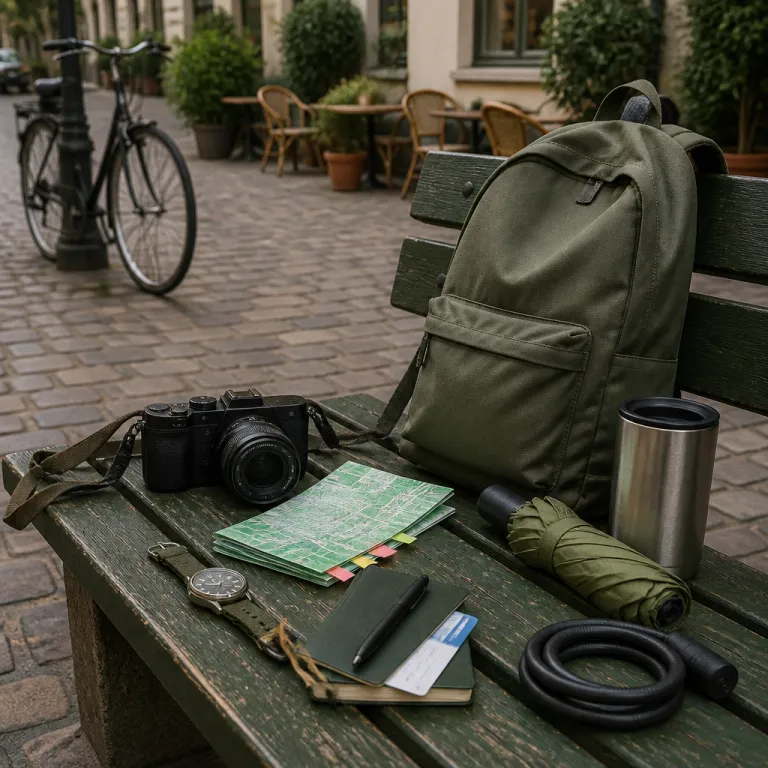
Even your packing reflects this mindset of focus and restraint. Instead of a heavy suitcase, you pack long enough for two days in a single carry-on bag, using packing cubes and a precise packing list that anticipates both meetings and late-night walks. A couple of long-sleeved layers, one quick-dry shirt, and reliable walking shoes will serve you better than a chaotic pile of outfits you never wear.
The neighborhood method: treating one district as your whole city
The most effective way to practice a slow 48-hour city break is to adopt the neighborhood method. You choose one district and behave as if that compact area is the entire city for two days, resisting the urge to chase distant attractions that only look good on a list. This is where off-the-beaten-path destinations shine, because their character is concentrated rather than diluted.
In a mid-sized European city, that might mean committing to a riverside quarter or a hilltop neighborhood instead of zigzagging between famous sites. Porto’s Ribeira, for example, rewards a weekend trip that stays low and close to the Douro, tracing the same cobbled streets at different times of day. You travel less in terms of distance, but you travel more deeply in terms of texture, sound, and the small things that locals barely notice.
On a recent 48-hour stay in Ribeira, a traveler we work with skipped the citywide sightseeing bus and spent both afternoons between the Miradouro da Vitória viewpoint and the riverfront arches. By the second evening, the staff at a tiny tasca near Rua da Reboleira were already pouring her usual glass of vinho verde before she sat down, proof that repetition can feel more luxurious than constant novelty.
For the business executive who has already spent a long day in meetings, this method is a form of self-preservation. You do not need a long trip across town after work when a single tram ride will drop you into a compact grid of wine bars, family-run restaurants, and river staircases. The 48-hour city break mindset says: stay put, walk slowly, and let the neighborhood reveal itself in layers.
Your packing strategy should mirror that simplicity. A single, well-organized bag with travel-size essentials, one pair of walking shoes, and a light shirt that can move from café to client dinner will serve you better than multiple outfit changes. Packing cubes keep work clothes and weekend clothes separate, so you can mentally clock off when you zip one section closed and pack long enough only for what you will actually wear.
Even footwear becomes a deliberate choice rather than an afterthought. Closed walking shoes handle cobblestones and unexpected cold weather, while a pair of understated flip flops in your bag works well for hotel spas or riverside decks. When your packing lists are this intentional, you spend less time worrying about what to pack and more time paying attention to the city.
The neighborhood method also changes how you eat and drink. Instead of chasing the single “best” restaurant in the city, you build a weekend around one food tradition repeated in different forms, from a market stall at daybreak to a late-night counter. That repetition, over two days, gives you a sense of how a city feeds itself, not just how it feeds visitors on a short trip.
High-service travelers used to resort properties will recognize the same principle in urban form. A carefully chosen stay in a quiet quarter of Canouan, for instance, can anchor an entire island experience without constant transfers, as explored in our refined guide to luxury stays in the Grenadines on Hidden Path Journeys. The 48-hour city break approach borrows that resort logic and applies it to cities: one strong base, minimal movement, maximum depth.
Local businesses benefit from this focus as well. When travelers commit to a single district, cafés, galleries, and small shops see visitors return across both days, turning a quick round trip into the start of a relationship. That repeat contact is where off-the-beaten-path destinations move from anonymous backdrop to somewhere you might genuinely love and plan to revisit.
Three cities that reward the 48-hour deep dive
Some cities are built for a 48-hour deep dive, especially when you approach them through a single neighborhood. Porto’s Ribeira, Taipei’s Dadaocheng, and Buenos Aires’ San Telmo each offer enough density of life, history, and texture to fill two days without ever opening a guidebook. They are not secret, but they are the kind of places where the map runs out and a local points you toward something better.
In Porto, Ribeira’s riverfront lanes compress centuries of maritime trade into a walkable amphitheatre of tiled façades and laundry lines. A weekend trip here works best when you accept that your time will be spent between the upper viewpoints and the lower quays, repeating the same climbs at different hours. You pack light, carry a refillable water bottle, and let your walking shoes earn their keep on steep staircases rather than on long taxi rides.
One of our regular guests still talks about a rainy Sunday morning in Ribeira when, instead of chasing a distant museum, she followed the smell of baking into a side street and ended up at a family-run padaria where the owner, João, insisted she try his grandmother’s broa de milho. That unplanned stop became the story she told more often than any postcard view.
Taipei’s Dadaocheng offers a different rhythm, with tea houses, fabric shops, and incense-thick temples threaded along Dihua Street. A 48-hour stay in this quarter turns into a masterclass in how a city renews itself without erasing its past, especially if you plan around morning markets and late-night snacks instead of big-ticket attractions. Quick-dry fabrics and a long-sleeved shirt in your bag will handle both humid afternoons and over-air-conditioned cafés.
Here, a simple ritual can anchor your whole weekend: starting both days with pour-over coffee at a small roastery just off Dihua Street, then returning after dark to the same counter for oolong tea and pineapple cake. By the second night, the barista is already recommending which temple courtyard to visit at dawn, and your 48-hour city break has turned into a conversation rather than a checklist.
San Telmo in Buenos Aires is where the 48-hour city break meets urban theatre. On a short trip, you can spend both days within a few blocks, watching antique dealers, tango dancers, and café regulars share the same cobbles from dawn to late evening. A simple packing list with one pair of shoes for walking, one shirt for dinner, and flip flops for your guesthouse courtyard will carry you through the weekend without fuss.
On Sundays, the Feria de San Telmo stretches along Defensa Street, but the most memorable moments often happen just off the main flow. One traveler recalls ducking into a tiny bar on Chile Street to escape a sudden downpour and finding an impromptu tango milonga unfolding between the tables, led by a local teacher who invited newcomers to join for a single song.
These districts also pair beautifully with longer itineraries. You might treat Porto as a hub for a wider round trip through northern Portugal, or use Taipei as the urban bookend to a week of quiet journeys in rural Vietnam, such as those outlined in our guide to quiet journeys beyond the usual highlights. In each case, the 48-hour city stay becomes a concentrated dose of urban energy that balances the slower days elsewhere.
For travelers drawn to more remote experiences, the same principle applies in places like the Galápagos Islands. Our analysis of immersive journeys beyond the ordinary shows how a tightly framed base can unlock a wider landscape without constant movement. In cities, a 48-hour city break plays the same role, anchoring your sense of place before or after a more adventurous leg.
What unites Ribeira, Dadaocheng, and San Telmo is not their architecture but their scale. Each is small enough to cross on foot in under an hour, yet layered enough that you could spend days noticing new details in the same alley. That is the sweet spot for a 48-hour city break: a place where your limited time feels like an invitation to return, not a reminder of what you missed.
Local businesses in these districts understand the rhythm of short visits. They design menus, exhibitions, and even opening hours around the reality that many guests have only two days, yet they resist the temptation to turn every interaction into a checklist of must-try items. That restraint is exactly what makes these cities feel like places to love rather than boxes to tick.
From checklist to choreography: planning, packing, and pairing your 48-hour city
To make a 48-hour city break work, you need to treat planning as choreography rather than accumulation. The goal is not to add more things to your list but to arrange a few strong moves in a sequence that feels natural. That means aligning your travel planning, your packing lists, and your choice of city so they all support the same rhythm.
Start with the calendar, not the attractions. Decide which two days you can genuinely protect from work and long calls, then choose a city break that fits within a comfortable round trip from your base. When your travel time is short and predictable, you arrive with energy to spare rather than stumbling into the city already exhausted.
Next, build a packing list that reflects the actual activities you will do, not the fantasy version of your weekend. If you plan to walk for hours each day through one or two neighborhoods, prioritize walking shoes, a quick-dry layer, and a long-sleeved shirt that can handle both cold weather and air-conditioned interiors. A compact bag with travel-size toiletries, a water bottle, and a small set of packing cubes will keep everything accessible when you change from work mode to weekend mode.
For executives extending a business trip, the art lies in separation. Use one packing cube for work clothes and another for off-duty pieces, so you can literally pack long meetings away at the end of the day and open a different wardrobe for the weekend. That physical act reinforces the mental shift from checklist travel to a slower, more attentive way of moving through the city.
When you sketch your plan, limit yourself to three anchors per day: one walk, one meal, one cultural moment. You might spend the morning tracing a riverside path, the afternoon in a single gallery, and the evening at a neighborhood restaurant you return to on both days. This kind of repetition is the opposite of “don’t waste time” thinking, yet it often produces the best stories when you travel.
Resist the pressure to treat off-the-beaten-path destinations as a long list of trophies. The most memorable 48-hour city experiences come from small decisions: lingering at a café where the staff already recognize you from the previous day, or returning to a market stall to ask about a spice you did not understand. Those moments rarely appear in guidebooks, but they are the ones that will pull you back to the same cities years later.
Finally, think of your 48-hour city as part of a wider pattern rather than a standalone event. A series of short city breaks, each focused on a single neighborhood, can add up to a long relationship with a region, especially in European cities where rail connections make weekend trips easy. Over time, your mental map fills not with monuments but with streets where you know exactly which door to push open for a late coffee.
Short city visits can be tiring when over-scheduled, and the data backs this up: "They can be if over-scheduled; balance is key." The case for the 48-hour city is not that you will see everything, but that you will see enough, and see it well. When you pack lightly, plan deliberately, and choose depth over breadth, two days in one city can feel like the most generous luxury in modern travel.
Key figures shaping the 48-hour city trend
- Average steps per day during intensive city visits often rise far above what travelers walk at home, which is manageable for a single day but becomes exhausting when repeated without rest, reinforcing the need for focused 48-hour itineraries that reduce unnecessary movement (based on aggregated findings from recent European walking-tour surveys and general physical activity guidelines).
- Short city visits structured around a 48-hour timeframe are increasingly used to maximize experience in minimal time, with travelers and local businesses aligning services around a clear arrival–exploration–departure pattern that reduces travel fatigue compared with longer, less structured stays (drawing on internal travel behavior reviews and industry analyses of micro-cations).
- Global travel trends show a rise in micro-cations and 24–48 hour city trips, particularly in mid-sized European cities investing in walkability and cultural infrastructure, which convert first-time visitors into repeat guests more effectively than larger, checklist-driven destinations (reported across multiple vacation-deprivation and slow-travel insight studies).