Why Plovdiv after dark belongs on your European city map
Plovdiv looks gentle in daylight, all pastel facades and Roman stones. Stay until night and the city shifts, revealing a layered character that makes any Plovdiv Bulgaria travel guide nightlife feel incomplete if it ends at sunset. This is the moment when the inhabited city breathes differently and the streets belong to locals again.
Set on the Maritsa River in central Bulgaria, Plovdiv is often treated as a quick day trip from Sofia or a pause between the capital and the Black Sea. Yet the city centre rewards those who give it time, because the best things here unfold slowly across one evening, one beer, one conversation. For off the beaten path travelers mapping their own city Europe circuit, Plovdiv Bulgaria offers a rare mix of ancient ruins, creative energy, and low key nightlife that still feels primarily Bulgarian rather than stage managed for visitors.
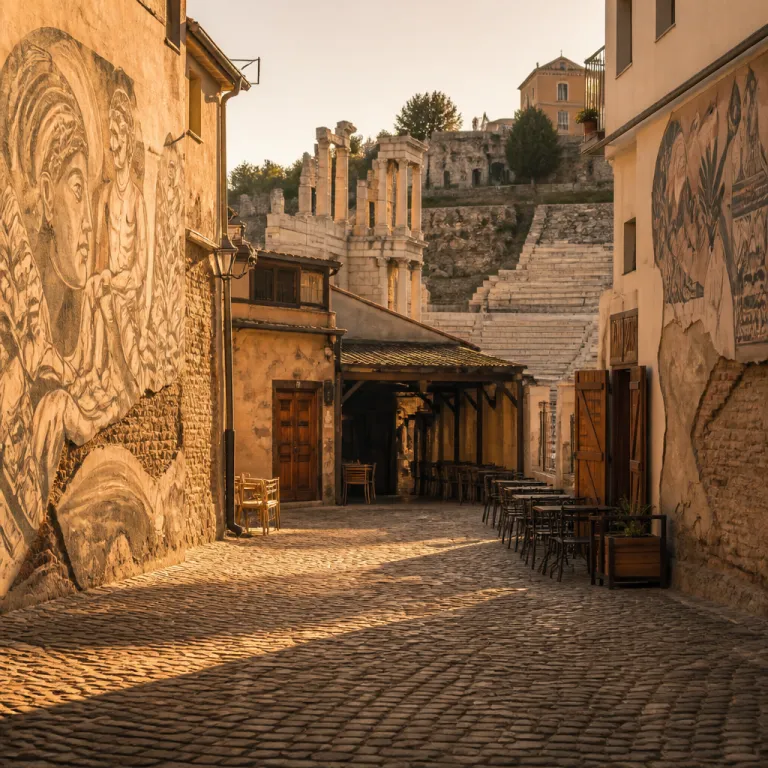
Plovdiv town is one of the oldest continuously inhabited city sites on the continent, and you feel that depth when you walk from the Ottoman mosques to the Roman theatre in a few minutes. The official travel guide material will highlight the UNESCO listed Old Town and the stadium, but the real Plovdiv best experiences happen between those landmarks, in the alleys where street art climbs cracked walls and a tiny beer bar glows behind an unmarked door. If you stay Plovdiv for at least one night, you start to understand how the former European capital culture investment still shapes the rhythm of the streets.
Walking through six millennia: from Roman stadium to Tsar Simeon Garden
The main pedestrian street in Plovdiv looks like any pleasant European shopping drag at first glance. Then you notice the glass panels under your feet and realise you walk directly above the Roman Stadium, one of more than 200 Roman ruins that thread through the city centre and the wider town Plovdiv area. This layering of eras is what makes a Plovdiv Bulgaria travel guide nightlife narrative so compelling, because the past is not sealed off behind fences ; it runs under your evening stroll.
Start your night with a slow walk from the Dzhumaya Mosque down towards Tsar Simeon Garden, letting the city reveal its textures. Street musicians set up near the stadium, while local street artists sometimes gather nearby before heading to paint new murals in Kapana or the Old Town. When you reach Tsar Simeon Garden, pause by the fountains and watch families, students, and older Plovdiv town residents share the same public space, a reminder that Bulgaria travel is still about people before places when done well.
From here, you can turn uphill into the Old Town, where cobbled lanes lead past National Revival houses and viewpoints that are particularly atmospheric at night. Some Roman ruins are lit after dark, although “Are the Roman ruins accessible at night? Some are; check local guidelines.” remains sound advice from archaeologists who work on site. If you prefer a different kind of evening, angle instead towards the creative quarter, because the Kapana district lies only a short walk away and offers one of the best things about staying in this city after sunset.
For travelers who enjoy cities that have reinvented their industrial or historic cores, the way Plovdiv has integrated its Roman heritage into daily life echoes other creative transformations, such as the industrial heritage revival along the Buffalo River described in this urban regeneration guide. In both places, walking becomes the method and the reward, turning a simple evening walk into a narrative of layers, textures, and quiet cultural confidence.
Kapana district: from derelict quarter to creative night village
Kapana once felt like a forgotten pocket of Plovdiv, a tangle of narrow streets left behind by commerce and fashion. Today the Kapana district is the creative heart of the city, a compact grid where galleries, studios, and bars share walls with small workshops and apartments. For anyone using a Plovdiv Bulgaria travel guide nightlife as a starting point rather than a script, this is where you should close the book and start to wander.
By day, Kapana is a place to find local design, street art, and independent cafés, with murals commissioned from local street artists who have turned blank walls into a constantly evolving outdoor gallery. As night falls, the same streets become a low rise amphitheatre of sound and light, with each beer bar, wine room, and cocktail spot spilling a different soundtrack into the alleys. The best things here are rarely the loudest ; often it is the small bar with a handful of stools and a short list of Bulgarian craft beer that ends up defining your trip.
Many venues in Kapana stay open late, but the mood is more conversational than chaotic, which suits solo travelers and small groups who want to talk rather than shout. You will find both locals and visitors comparing notes on the latest murals, new openings, and the subtle shifts in the neighbourhood’s identity as tourism grows. If you are planning where to stay Plovdiv for a few nights, choosing a guesthouse or apartment within walking distance of Kapana makes it easy to move between day and night worlds without relying on taxis, much like choosing the right quarter in Hanoi shapes your experience as outlined in this characterful neighbourhood guide.
Kapana’s evolution from neglected quarter to creative hub mirrors other off the beaten path urban transformations, such as the quiet cultural shift in the Azores where former working harbours now host thoughtful bars and studios, a process explored in this Azores slow travel feature. In Plovdiv, that same energy is concentrated into a few compact streets, making it easy to experience both the artistic and nightlife sides of the neighbourhood in a single evening walk.
Bars, beer, and late night culture: how Plovdiv drinks
Nightlife in Plovdiv is less about spectacle and more about intimacy, which suits a city that still feels primarily for its residents. You will find a spectrum of places to drink, from traditional mehanas serving Bulgarian wine and rakia to minimalist spaces pouring craft beer from small regional breweries. For travelers used to higher prices in the capital, the cost of a night out here underlines why Bulgaria travel remains one of the best value propositions in the European Union.
In Kapana, look for bars that specialise in Bulgarian craft beer, often rotating taps from microbreweries in Plovdiv and Sofia alongside international styles. A good beer bar here might offer only a few snacks but compensate with knowledgeable staff who can guide you through local IPAs, stouts, and sours, turning a casual drink into an informal tasting. Many of these venues stay open late without feeling rushed, allowing you to stretch one evening into a sequence of short, unhurried stops rather than a single long session.
Beyond Kapana, the wider city centre hides wine bars in side streets and a handful of rooftop terraces that frame the hills and the Old Town in soft light. Some of the best things to do at night involve simply choosing a terrace, ordering a glass of Bulgarian red, and watching how the city moves around you, from students heading to concerts to archaeologists and bar owners finishing their shifts. For solo travelers, this style of nightlife feels welcoming rather than performative, because the scale of Plovdiv town keeps encounters human sized and the emphasis on conversation rather than display.
If you are planning a longer trip through the region, consider how Sofia Plovdiv connections shape your evenings, because the capital offers a denser, louder scene while Plovdiv provides a more measured rhythm that many travelers end up preferring. In both cities, beer culture has grown alongside a renewed interest in local wine, giving you multiple ways to structure your nights without repeating the same experience twice. Over several days, alternating between day and night explorations in this city Europe corner will give you a fuller sense of how contemporary Bulgarian urban life feels away from the most obvious tourist circuits.
Day trips, access, and practical tips for staying after sunset
Part of the appeal of Plovdiv is how easily it fits into a wider Balkan itinerary while still rewarding a longer stay. Trains and buses link Sofia and Plovdiv in around two to three hours, making the Sofia Plovdiv route one of the most straightforward internal journeys in Bulgaria. Many travelers treat it as a simple day trip, but extending your time in the city by at least one night allows you to experience both the Roman and nightlife layers that define this Plovdiv Bulgaria travel guide nightlife focus.
From Plovdiv, you can plan day trips to Bachkovo Monastery and the Rhodope Mountains, returning in the evening to the familiar streets of the city centre. This rhythm — mountains or monasteries by day, Kapana and the Old Town by night — turns a short visit into a more rounded trip that connects landscape, history, and contemporary culture. Because Bulgaria offers some of the lowest average daily travel costs in the European Union, staying longer in Plovdiv town often feels like an upgrade rather than an indulgence, especially when you factor in the relatively modest prices for food, beer, and accommodation.
When you stay Plovdiv for several nights, choose a base within or near the city centre so you can walk almost everywhere, from Tsar Simeon Garden to the hills and the Kapana district. Wear comfortable shoes, check opening hours for specific ruins and bars, and stay aware of your surroundings, especially on quieter streets after midnight. Methods such as self guided exploration, occasional walking tours, and local recommendations from bar staff or guides will help you find the best things to do at night without relying solely on printed or online travel guide material.
For travelers who value off the beaten path urban experiences, Plovdiv best rewards curiosity and a willingness to turn down side streets that the guidebooks skip. You will find that the most memorable things Plovdiv offers at night are often small scale moments — a conversation with a bar owner about new murals, a glimpse of Roman stone under streetlight, a quiet beer on a side terrace while the city hums around you. Over time, these details accumulate into a personal narrative that no standard city guide can fully script, which is precisely why this inhabited city deserves a place on your long term Europe travel map.
FAQ
Where is the best street art in Plovdiv at night ?
The most concentrated street art in Plovdiv sits in and around the Kapana district, where local street artists have transformed walls, shutters, and courtyards into a dense open air gallery. You will also find notable murals in the Old Town and along some side streets off the main city centre pedestrian zone, which are easy to reach on foot. Evening walks through these areas feel safe and atmospheric, especially in Kapana where bars and cafés keep the streets active late into the night.
Are the Roman ruins in Plovdiv accessible after dark ?
Several key Roman ruins in Plovdiv, including sections of the Roman Stadium beneath the main pedestrian street, remain visible and partially lit after dark. Access to specific sites varies, with some areas open for evening events and others viewable only from street level once official visiting hours end. Always check local guidelines or ask at the tourist information centre during the day if you plan a focused night time visit to archaeological sites.
What are some hidden bars in Plovdiv for a quieter night ?
Many of the most characterful bars in Plovdiv hide in Kapana’s side streets, often behind modest facades or up short staircases above street level. Look for small spaces specialising in Bulgarian craft beer, natural wine, or short, well executed cocktail lists rather than large venues with heavy promotion. Asking staff in one favourite bar for their personal recommendations is usually the most reliable way to find low key spots that stay open late without attracting large, noisy crowds.
Is Plovdiv a good base for day trips while still enjoying nightlife ?
Plovdiv works well as a base for day trips to Bachkovo Monastery, Asen’s Fortress, and the lower Rhodope Mountains, all reachable within roughly one to two hours. Returning to the city in late afternoon gives you time to rest before heading out again to the Old Town viewpoints, Tsar Simeon Garden, or Kapana’s bars. This balance between daytime excursions and compact, walkable nightlife makes the city an efficient and rewarding stop on a longer Bulgaria travel itinerary.
How does Plovdiv’s nightlife compare with Sofia’s scene ?
Sofia offers a larger, more varied nightlife scene with bigger clubs and a wider range of music venues, which suits travelers seeking high energy nights. Plovdiv, by contrast, focuses on smaller bars, intimate terraces, and a strong connection between street life, art, and drinking culture, especially in Kapana and the historic centre. Many visitors find that combining a few nights in each city provides the best overview of contemporary Bulgarian urban life, with Sofia delivering scale and Plovdiv offering depth.