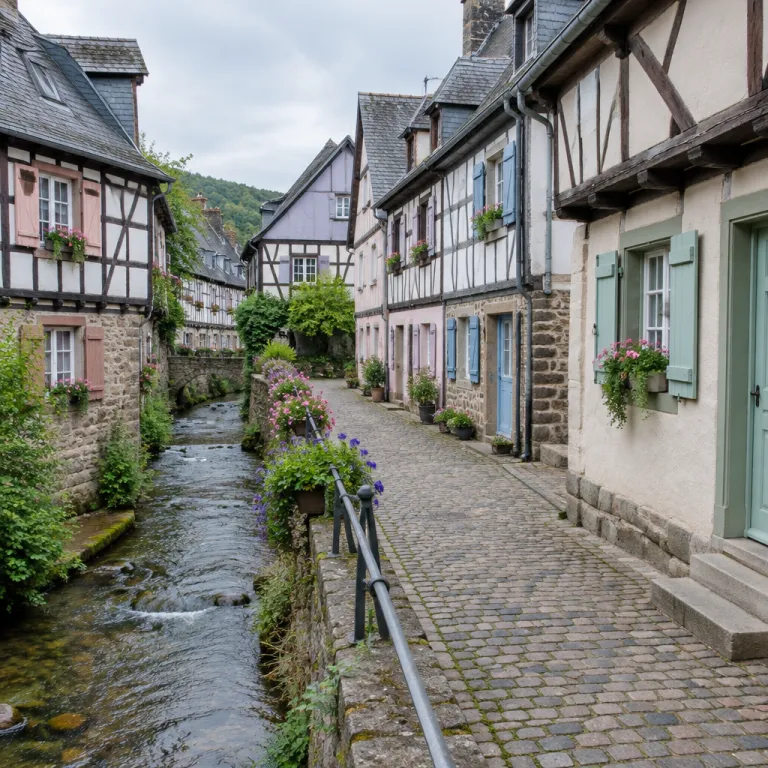
Why little towns in Germany reward the curious traveler
Little towns in Germany sit between village and city, offering a rare balance. In planning terms, a small town here usually means 5 000 to 20 000 residents, or even fewer if the place provides central services such as schools, clinics, and rail links. That definition matters for travelers because it explains why a seemingly sleepy town can still feel connected, livable, and surprisingly vibrant.
Roughly 29 percent of the population in Germany lives in these small urban centres, so you are not stepping into museum pieces but into working communities with layered stories. Federal and regional planners use population counts, infrastructure audits, and spatial planning tools from the Bundesinstitut für Bau-, Stadt- und Raumforschung (BBSR) to classify these towns, which in turn helps maintain services that visitors quietly rely on, from reliable buses to well kept cobbled streets. Recent BBSR overviews of settlement structure and central places note that this network of small towns underpins everyday life for millions of residents, which also explains why off the beaten path experiences here often feel surprisingly well supported.
When you read about little towns in Germany, you will notice how often timbered houses and medieval town walls appear in the same sentence. That is not romantic exaggeration; it reflects a long standing policy focus on heritage conservation and rural development, which has kept many half timbered Altstadt districts intact. For travelers, this means that a day trip to a compact town can combine practical access with a sense of stepping sideways in time, especially in regions such as central Germany or the Harz where historic fabric remains dense and beautifully preserved.
Meissen and central Germany’s riverside small towns
Meissen in Saxony is a textbook example of how modest German towns can feel both intimate and cosmopolitan. The town rises steeply above the Elbe River, its medieval core crowned by Albrechtsburg Castle and the cathedral, while narrow lanes of timbered houses cascade down toward the water. Walk just ten minutes from the station and the city scale falls away, replaced by a compact old town where every corner opens a window onto porcelain workshops, wine taverns, and quiet courtyards.
Plan at least one full day trip to Meissen from Dresden or Leipzig, because the town rewards slow exploration. Regional trains from Dresden Hauptbahnhof take about 35 minutes, while services from Leipzig usually involve a change in Riesa and take around 70 to 80 minutes. Mornings are ideal for touring the porcelain manufactory and the hilltop ensemble, then you can spend the afternoon wandering cobbled streets lined with half timbered façades and small cafés. Many travelers pair Meissen with other small towns in central Germany, using Elbe Valley rail lines for easy day trips that reveal how different each medieval town feels despite sharing similar street patterns and church spires.
These riverside towns in Germany are particularly atmospheric in the weeks before Christmas, when local associations and residents stage intimate Christmas markets in the main squares. Compared with the large city events, a Christmas market in a place like Meissen feels more personal, with regional wine, hand painted ornaments, and choirs from nearby villages. One stallholder might tell you how they “see the same families every Advent weekend, sometimes three generations together,” a reminder that these markets are first and foremost local gatherings. If you enjoy exploring quieter European coasts such as the Albanian Riviera before the crowds, as described in this guide to a still under the radar Mediterranean coast (https://www.hiddenpathjourneys.com/albanias-riviera-before-the-crowds-why-this-mediterranean-coast-wont-stay-quiet), you will likely appreciate the same early mover advantage in these lesser known German towns.
Harz mountains and the storybook towns of the Harz region
The Harz mountains form one of the richest regions for little towns in Germany, especially if you value half timbered architecture and layered mining history. Places such as Quedlinburg, Wernigerode, and Goslar each present a different face of the Harz region, yet all share dense ensembles of timbered houses and steep cobbled streets that seem designed for slow walking. These are not theme park sets; they are lived in communities where residents and administrators act as community builders, maintaining heritage while running everyday services.
Quedlinburg is often cited as one of Germany’s best preserved medieval town centres, with more than a thousand half timbered houses spanning several centuries. Spend a day trip here and you will notice how the street grid shifts from broad market squares to tight alleys, each turn revealing another beautiful gabled façade or a small courtyard garden. The town’s UNESCO World Heritage status has brought investment, yet it remains a place where you can still find quiet corners, especially if you stay after the easy day trippers have returned to the city. Trains from Magdeburg or Halle typically take between 60 and 90 minutes, making Quedlinburg an achievable excursion without a car.
In winter, the Harz mountains’ small towns stage some of the most atmospheric Christmas markets in Germany, framed by snow dusted roofs and the smell of resin from nearby forests. Wernigerode’s Christmas market wraps around its colourful town hall, while Goslar’s market extends into a “Christmas forest” of fir trees on the main square, creating a setting that feels both theatrical and intimate. Travelers who enjoy destinations such as Sicily beyond the postcard, with volcanic hikes and baroque villages that tour buses miss, will find a similar off the beaten path satisfaction in the Harz region’s network of small towns (https://www.hiddenpathjourneys.com/sicily-beyond-the-postcard-volcanic-hikes-street-food-and-baroque-villages-the-tour-buses-miss).
Rothenburg ob der Tauber and the reality behind the postcards
Rothenburg ob der Tauber is often the first name that appears when people talk about little towns in Germany, and with reason. The town’s intact walls, watchtowers, and tightly packed timbered houses create a medieval townscape that feels almost unreal at first glance. Yet behind the postcard views lies a complex story of reconstruction, tourism management, and local life that rewards a more thoughtful visit.
To experience Rothenburg ob der Tauber beyond the crowds, treat it as more than a quick day trip from a major city. Arrive in the late afternoon, when many tour groups have already left, and walk the walls at sunset as the light softens on the half timbered roofs. Staying overnight opens a window onto a different rhythm, with early morning walks along cobbled streets that feel almost private and evening meals in family run restaurants where you hear more German than foreign languages. Typical rail journeys from Nuremberg or Würzburg take around 70 to 90 minutes with one change, so an overnight stay fits easily into a wider Franconia itinerary.
The town is also a case study in how small towns in Germany manage intense seasonal demand, especially around Christmas when its famous Christmas markets and year round Christmas shops draw visitors from across the world. Local authorities balance preservation with practical needs, using planning tools similar to those applied in other towns Germany wide to protect historic fabric while keeping services functional. For travelers, this means that even in a heavily visited place, you can still find quieter corners and meaningful encounters if you time your visit carefully and step just a few lanes away from the main squares.
Island quiet in Rügen and coastal small towns
Not all little towns in Germany are inland; some of the most atmospheric lie along the Baltic coast and on islands such as Rügen. Here, small towns and villages cluster around harbours, chalk cliffs, and beech forests, offering a different palette of experiences from the timbered houses of central Germany. The architecture shifts toward seaside villas and fishermen’s cottages, yet the same small town scale and community focus remain.
On Rügen, towns like Putbus, Sassnitz, and Binz each offer their own version of coastal charm, from classical squares to piers that stretch into the Baltic Sea. These places work well as bases for day trips by bicycle or local bus, allowing you to combine beach walks with visits to inland villages that rarely appear in international guidebooks. Trains from Stralsund to Binz usually take under an hour, and local buses fan out from there to smaller settlements. If you appreciate quiet Gulf escapes such as the lesser known stretches near Sanibel Island and Fort Myers, described in this guide to a tranquil Gulf Coast break (https://www.hiddenpathjourneys.com/how-close-is-sanibel-island-to-fort-myers-florida-for-a-quiet-gulf-escape), you will recognise the appeal of Rügen’s softer, more contemplative seaside towns.
Winter brings a different mood to these coastal towns in Germany, with bracing walks along near empty promenades and cafés that serve hearty German cakes instead of beach cocktails. While you will not find large Christmas markets on every pier, many small town squares host modest events where locals outnumber visitors and traditions feel unforced. For travelers interested in off the beaten path destinations, this seasonal shift can be a reason to visit Germany outside the usual summer and Christmas peaks, trading crowds for space and a more local rhythm.
Planning day trips and longer stays in small German towns
Designing an itinerary around little towns in Germany works best when you understand how the national rail and bus networks support these places. Many small towns function as local hubs, with stations that connect surrounding villages to larger cities, which makes them ideal anchors for day trips without a car. This infrastructure is not accidental; it reflects decades of spatial planning aimed at ensuring service provision and balancing regional development.
For travelers, that means you can base yourself in a small town and still enjoy easy day excursions to nearby attractions, whether that is a castle, a vineyard, or a forest trail. A town like Meissen, for example, can anchor several day trips along the Elbe, while a base in the Harz mountains opens access to multiple medieval town centres within an hour by train or bus. When you read timetables and local tourism brochures, you will notice how often they highlight cobbled streets, half timbered Altstadt districts, and Christmas market dates, because these are the assets that draw both residents and visitors into the town centre.
Accommodation in these small towns in Germany tends to favour guesthouses, pensions, and family run inns rather than large chains, which aligns well with a slower style of travel. Staying several nights allows you to see how a small town changes between weekday routines and weekend events, from farmers’ markets to local festivals. As one planning summary from the BBSR puts it, “About 29 percent of the population lives in small towns in Germany, which means these places are not peripheral curiosities but central to the country’s social and economic fabric.”
Key figures and planning insights for little towns in Germany
- Germany counts roughly two thousand officially classified small towns with between 5 000 and 20 000 residents, according to analyses by the Federal Institute for Research on Building, Urban Affairs and Spatial Development (BBSR); this density means travelers can integrate several small town stops into a single regional itinerary.
- About 29 percent of the German population lives in small towns, a share that underlines how central these places are to national life rather than being marginal rural outposts. Recent BBSR reports on settlement patterns and central places repeatedly highlight this figure when discussing regional policy.
- Germany’s smallest town, Arnis in Schleswig Holstein, has a population of around 300 people, illustrating how the “town” category can include very small municipalities that still perform central functions for their surroundings.
- Recent planning papers highlight that while the overall number of small towns in Germany has remained relatively stable, digital infrastructure and service provision have become key concerns, which directly affects the quality of experience for visitors relying on mobile connectivity and public transport information.
- Heritage tourism and interest in off the beaten path destinations are cited by German regional planning authorities as growing opportunities for small towns, supporting local economies while encouraging the preservation of medieval town centres and timbered houses.
FAQ about little towns in Germany
What defines a small town in Germany for planning and travel?
A small town in Germany is generally a municipality with between 5 000 and 20 000 inhabitants, or in some cases fewer residents if it provides central services such as schools, healthcare, and transport links. For travelers, this means a small town usually offers enough infrastructure for comfortable stays while retaining a compact, walkable scale. These places often serve as local hubs, making them practical bases for day trips into surrounding countryside.
How many people live in small towns across Germany?
Approximately 29 percent of the German population lives in small towns, according to recent spatial planning analyses by the BBSR and related institutes. This high share shows that small towns are not niche or peripheral but form a major part of the country’s settlement structure. When you plan a trip focused on little towns in Germany, you are engaging with a way of life that is central to how the country functions.
Why are small German towns so well preserved?
Many small towns in Germany retain medieval street patterns and timbered houses because of long term heritage policies and postwar reconstruction choices. Federal and regional authorities have used planning tools, conservation laws, and funding programmes to protect historic centres while maintaining everyday services. This combination allows travelers to experience authentic medieval townscapes that still support contemporary life, rather than frozen museum districts.
Are small towns in Germany easy to reach without a car?
Most small towns in Germany are accessible by regional trains or buses, especially in central Germany, Saxony, Bavaria, and the Harz region. National and regional planners explicitly design transport networks to connect these towns with larger cities, supporting both residents and visitors. For travelers, this means you can structure a trip around rail based day trips, moving between small town bases without needing to drive.
Which regions are best for exploring multiple small towns in one trip?
Regions such as the Harz mountains, the Middle Rhine, Saxon Switzerland, and parts of Franconia are particularly suitable for itineraries focused on little towns in Germany. In these areas, medieval town centres, riverside settlements, and half timbered villages lie within short train or bus rides of each other. This density allows you to combine several small town experiences, from Christmas markets to vineyard walks, within a single week of travel.