The 2026 eSIM International Travel Connectivity Guide
- Why this is the moment to rethink your phone abroad
- How eSIMs compare to roaming, local SIMs and pocket WiFi
- Data only versus voice and the business traveler’s dual setup
- When eSIMs fail you off the beaten path
- Setting up before departure and avoiding classic mistakes
- Regional nuances and backup strategies for remote itineraries
- Choosing providers and plans with real world reliability
- Key figures on eSIMs, roaming and global coverage
- Frequently asked questions about eSIMs and international travel
Why this is the moment to rethink your phone abroad
Roaming used to be the quiet surcharge on every ambitious itinerary. Now an eSIM international travel connectivity guide 2026 needs to start with one fact; most recent smartphones ship with embedded SIM technology as standard. That shift means travelers who care about off the beaten path destinations can treat connectivity as a tool, not a constraint, choosing the best mix of mobile data, WiFi and local options for each country.
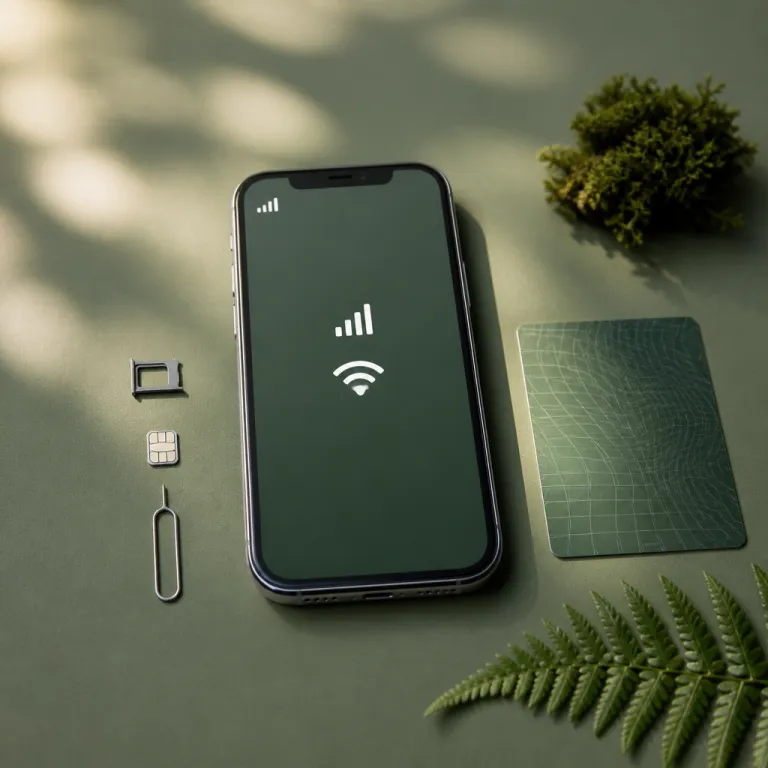
An eSIM, or embedded SIM, is a virtual sim card soldered into your phone that can store multiple profiles and data plans without any physical plastic. Industry definitions are simple and precise; “What is an eSIM? A virtual SIM embedded in devices for network access.” That clarity matters because eSIM technology now underpins global connectivity strategies for business travelers, digital nomads and anyone stretching a work trip into a long weekend in a lesser known country.
Coverage has caught up with the promise. Reliable esims are now available in more than 200 countries and territories, with 5G mobile data already live in at least 40 of those, which makes a global esim or regional travel esim a realistic backbone for international travel rather than a niche experiment. Public figures from the GSMA and major carrier reports confirm that hundreds of operators now support eSIM provisioning, so for an executive flying from New York to Tbilisi via Istanbul, a single multi country eSIM plan can handle data, messaging and app based calls across borders, while a physical sim from a local operator becomes a tactical extra rather than the main lifeline.
How eSIMs compare to roaming, local SIMs and pocket WiFi
For a serious traveler, the choice is no longer between “roam or switch off” but between four distinct tools. Traditional international roaming from your home carrier still offers the cleanest experience for your phone number, yet it remains the most expensive way to buy data in many countries. Pocket WiFi units promise unlimited data at a flat daily rate, though they add another device to charge and carry, which feels clumsy when esims can now deliver similar coverage directly to your phone.
Local sim cards bought on arrival still win on raw cost per gigabyte in many markets, especially in Southeast Asia and Eastern Europe. A physical sim from a local operator can be ideal when you stay in one country for weeks, need a local sim number for deliveries or banking, and want generous data plans for tethering laptops. The trade off is time; hunting for a kiosk after a red eye flight is less appealing when an esim international profile from a global provider can be activated in minutes before you board.
To decide between roaming, travel esims, local sim cards and pocket WiFi, it helps to compare typical patterns. In Western Europe or North Asia, home carrier roaming can cost tens of dollars per day for modest data, while a regional eSIM often delivers several gigabytes for the same weekly price. In Southeast Asia, a local prepaid sim may offer tens of gigabytes for the cost of a single roaming day pass, whereas in parts of the Gulf or North America, a global esim with transparent caps can undercut both roaming and airport kiosks. Pocket WiFi tends to sit in the middle on price but adds deposits, pickup logistics and battery anxiety, which is why many frequent travelers now treat it as a niche solution for groups rather than a default.
Quick comparison snapshot
| Option | Typical cost* | Best for | Main drawback |
|---|---|---|---|
| Home carrier roaming | $10–$15/day for 1–2 GB | Short trips, keeping main number | Highest price per GB |
| Travel eSIM (regional/global) | $15–$40 for 5–20 GB | Multi country itineraries | Variable coverage in remote areas |
| Local physical SIM | $5–$20 for 15–50 GB | Stays of 1–4+ weeks in one country | Time spent buying and registering |
| Pocket WiFi | $5–$12/day, often “unlimited” | Groups sharing one connection | Extra device, deposits, charging |
*Illustrative ranges based on public carrier and travel eSIM pricing as of 2025; always confirm current rates for your route.
Data only versus voice and the business traveler’s dual setup
Most travelers overestimate how many traditional voice minutes they need abroad. In practice, a data only eSIM plan paired with a VoIP or unified communications app covers almost every scenario, from client calls to checking in with family. The key is to choose data plans with enough headroom for video meetings and map heavy travel days, rather than chasing the cheapest headline rate with unrealistic gigabyte limits.
For executives extending business trips into leisure, the dual sim capabilities of modern phones are transformative. You can keep your home physical sim active for calls and SMS to your main phone number while routing all mobile data through a travel esim that offers better international coverage and more predictable costs. This dual setup also protects you from accidental roaming; you simply disable data roaming on the physical sim and let the eSIM handle every megabyte.
When you expect to cross several borders on one itinerary, look for multi country esim plans that explicitly list all your destinations and offer either unlimited data or a generous fair use cap. A well structured eSIM international travel connectivity guide 2026 should also remind you to check whether your corporate mobile policy allows third party esim travel purchases or requires specific esim providers for compliance. For longer European itineraries with family in tow, it is worth pairing this connectivity strategy with broader cost saving tactics such as the real budget hacks for traveling Europe with kids, so your plan for data and your plan for daily spending work together.
When eSIMs fail you off the beaten path
Even in a year when eSIM adoption is rising fast, there are still gaps. Some countries maintain limited eSIM infrastructure, or restrict which esim providers can offer local profiles, which means your carefully chosen global esim may fall back to 3G or lose coverage outside major cities. In those cases, a physical sim from a local operator, or even an old fashioned local sim card bought in a village shop, can outperform the sleekest travel esims.
Device compatibility is another quiet failure point. Not every mid range phone sold in every country supports esim technology, and some dual sim phones only allow one active data profile at a time, which complicates the elegant “one physical sim, one eSIM” narrative. Before you rely on any eSIM international plan, verify that your phone supports esims, that it is fully unlocked, and that your chosen esim plans explicitly support the countries on your route.
Remote work from off grid locations adds another layer of risk. In rural valleys, islands and mountain towns, WiFi in guesthouses can be more reliable than mobile data, while in other regions the opposite is true, so a serious eSIM international travel connectivity guide 2026 must insist on redundancy. Carry at least one backup option, whether that is a second travel esim from a different provider, a spare physical sim card ready to activate, or a plan to rely on WiFi for heavy uploads while using limited mobile data to stay connected for maps and messaging.
Setting up before departure and avoiding classic mistakes
Preparation is where seasoned travelers quietly save the most money. The smartest move is to install your chosen travel esim while you still have stable WiFi at home or in the office, then test that the profile downloads correctly and that your phone routes mobile data through the right plan. Many esim providers offer dashboards that show remaining data, active countries and renewal options, which makes it easier to adjust plans before you cross a border.
Common errors are surprisingly consistent. Travelers forget to check whether their phone is unlocked, buy far more data than they will realistically use, or fail to disable data roaming on their home physical sim, which leads to expensive background updates. A disciplined checklist helps; verify device eSIM compatibility, research local WiFi availability in your first country, and choose suitable data plans that match your actual travel style rather than an aspirational one.
For those who care about both budget and footprint, connectivity planning sits alongside sustainable choices about flights and stays. When you read analyses such as the piece on what happens when travelers genuinely prioritize sustainability, it becomes clear that reducing wasteful roaming and unnecessary plastic sim cards is part of a broader responsible travel strategy. A carefully chosen global esim with transparent coverage and fair pricing is not only the best financial option for many itineraries, it is also a quieter, more efficient way to stay connected without constant trips to phone shops.
Regional nuances and backup strategies for remote itineraries
Connectivity quality varies dramatically between regions, and so should your setup. In much of Western Europe, North Asia and parts of the Gulf, eSIM support is mature, 5G coverage is dense in cities, and a single multi country eSIM plan can carry you across borders with minimal friction. That makes these regions ideal for relying primarily on esim travel profiles, using local sim cards only when you settle in one country for a month or more.
By contrast, parts of Central Asia, the Caucasus, West Africa and rural Latin America still reward a more layered approach. Here, a travel esim with broad international coverage acts as your safety net for airports, border crossings and major towns, while a physical sim from a local operator may deliver better speeds and truly unlimited data once you arrive in a specific valley or island. When you plan a route that mixes cities with remote countryside escapes, such as a Tuscan hill village detour inspired by evocative countryside travel guides, treat connectivity as part of the itinerary rather than an afterthought.
WiFi still has a role, especially for heavy uploads, software updates and long video calls. Many off the beaten path guesthouses now advertise decent WiFi, but speeds and stability can fluctuate, so your eSIM international setup should assume that mobile data will handle navigation and messaging while WiFi handles bulk tasks. In practice, the best esim for a complex route is often the one that combines honest coverage maps, responsive support and flexible esim plans, not just the lowest headline price, because when a storm hits a mountain pass you care less about a one dollar saving and more about whether your phone can still stay connected.
Choosing providers and plans with real world reliability
With eSIMs and WiFi advancements reducing roaming anxiety, the market has become crowded. Providers such as Ubigi focus on wide coverage and flexible plans, Saily emphasizes frictionless onboarding for first time travel esims, and Airalo offers a mix of local, regional and global esim options that suit both short trips and long multi country journeys. The right choice depends less on marketing and more on how, and where, you actually travel.
For a frequent flyer who hops between major business hubs, a single global esim with generous data and strong support may be the best long term plan, especially if it offers easy top ups and clear fair use policies on unlimited data. For a traveler who spends weeks in one country, a local sim or country specific eSIM plan often delivers better value, while keeping a secondary travel esim in reserve for border crossings and unexpected detours. Whatever you choose, treat your eSIM international setup as infrastructure; test it, understand its coverage limits, and keep at least one backup option such as a spare physical sim card or a second profile from another provider.
As roaming fees continue to decrease and WiFi networks expand, the most effective eSIM international travel connectivity guide 2026 is less about chasing a single perfect product and more about building a resilient stack. That stack might include your home physical sim for your main phone number, a primary global esim for day to day mobile data, a local sim in countries where prices are compelling, and a clear habit of using secure WiFi for heavy tasks. When those pieces work together, your phone becomes an unobtrusive companion rather than a source of anxiety, leaving you free to focus on the road that bends away from the main map.
Key figures on eSIMs, roaming and global coverage
- eSIM coverage now extends to more than 200 countries and territories worldwide, which means a single travel esim can realistically support most international travel itineraries across multiple regions (source; GSMA Intelligence and carrier availability databases).
- At least 40 countries already offer commercial 5G networks, allowing compatible esims and phones to deliver higher mobile data speeds than many hotel WiFi networks in major cities (source; GSMA and national telecom regulator reports).
- Industry timelines show a steady rise in eSIM adoption, with more flagship and mid range phones shipping with embedded esim technology and dual sim support, which reduces reliance on physical sim cards for frequent travelers.
- Carrier and technology partnerships focused on eSIM integration and WiFi expansion have contributed to a measurable decline in average roaming costs for international travelers compared with previous years, especially on data heavy plans.
- Travelers who verify device eSIM compatibility, research local WiFi availability and choose suitable data plans before departure consistently report lower connectivity costs and fewer coverage surprises during complex multi country trips.
Frequently asked questions about eSIMs and international travel
What is an eSIM and how does it differ from a physical SIM ?
An eSIM is a virtual sim card embedded directly into your phone, which can store multiple operator profiles without any removable plastic. A physical sim, by contrast, is the traditional card you insert into a tray, and you must swap it out to change networks or countries. With eSIM technology you can download, activate and switch between data plans digitally, which is particularly useful for international travel and multi country itineraries.
How do I activate an eSIM for my next trip ?
Activation is usually straightforward; “How to activate an eSIM? Use provider's app or scan a QR code.” In practice, that means you purchase a plan from your chosen provider, receive a QR code or in app link, and follow the prompts on your phone to install the profile. It is wise to complete this process while you still have reliable WiFi at home, then test that mobile data works correctly before you board your flight.
Are eSIMs available in every country I might visit ?
eSIM support is now widespread, with services available in more than 200 countries across all major regions. However, not every operator in every country offers eSIM profiles, and coverage quality can vary between urban centers and remote areas. For complex routes, it is sensible to combine a global esim or regional travel esim with the option to buy a local sim card in specific countries where eSIM infrastructure is still developing.
Should I choose a data only eSIM or a plan with calls and texts ?
For most modern travelers, a data only eSIM plan is sufficient, because messaging apps and VoIP services can handle almost all communication needs. If you rely heavily on your existing phone number for voice calls, you can keep your home physical sim active for calls and SMS while routing mobile data through a travel esim. Plans that bundle traditional voice minutes can still be useful in countries where app based calling is restricted or where you need a local phone number for business.
Is it still worth buying a local SIM card when I arrive ?
Local sim cards remain valuable in countries where mobile data is very inexpensive and eSIM options are limited or more costly. A physical sim from a local operator can offer generous or unlimited data for long stays in a single country, especially if you need to tether laptops or run bandwidth heavy tasks. Many frequent travelers now use a hybrid approach; they rely on a global esim for seamless coverage across borders, then add a local sim in specific markets where the savings and extra coverage justify the extra step.